

How to Thrive in the Age of AI Overviews
Key Points
- Zero-click searches are real – Many users never leave the search page – 58.5% of U.S. Google searches and 59.7% of EU searches ended without a click. That means being featured in AI answers matters more than just ranking well in traditional blue-link SEO.
- Write like a human, for AI – Use clear, natural language and detailed descriptions to help AI understand and recommend your content.
- Reviews are critical – AI pulls reviews from platforms like Google, Yelp, and TripAdvisor to decide which businesses to suggest.
- FAQs boost visibility – Real, conversational customer questions and answers make your site more helpful to both people and AI.
Artificial Intelligence is no longer just a futuristic concept – it’s transforming how people search for information and how businesses get found online. Tools like Google’s AI Overview, ChatGPT, and others are reshaping search engine results pages (SERPs) in real time. This evolution brings a new challenge: the rise of zero-click search, where users receive answers and recommendations directly on the search page without ever clicking through to a website. (See how AI is impacting visits to Alaska Tourism websites).
If you’re a business owner, marketer, or service provider, this shift matters deeply. It changes the game for online visibility and SEO. The good news? There are clear, actionable steps you can take to adapt and stay ahead in this new AI-driven search landscape. In this article, I’ll walk you through what’s happening, why it matters, and practical strategies to help your business shine in AI-powered search results.

The Impact of AI on Online Search and Why It Matters
For years, SEO revolved around ranking well in the traditional “blue link” lists — the classic top ten website results Google displayed for any given query. Being in the top three was gold, and being on the second page was like being invisible. But this is changing fast.
Today, AI-powered overviews are appearing at the very top of search results, summarizing information and making direct recommendations. These AI summaries pull data from multiple sources across the web — including reviews from Google Business Profiles, Yelp, TripAdvisor, and even industry-specific platforms. The result? Users often get everything they need from the AI answer itself, without clicking on a single website.
This means your website may get fewer visits from organic search, even if you rank well traditionally. The AI overview is becoming the new gatekeeper, and it’s influencing purchasing decisions much earlier in the buyer’s journey. In fact, people clicking on AI-generated recommendations are about four times more likely to hire or buy from those businesses than those who find companies via the old blue link lists.
Because of this, the way you earn visibility online is evolving. In markets like the U.S., only 360 out of 1,000 Google searches send users to the open web. It’s no longer enough to just optimize for traditional SEO keywords and rankings. You need to optimize your content and online presence to be recognized and recommended by AI systems.
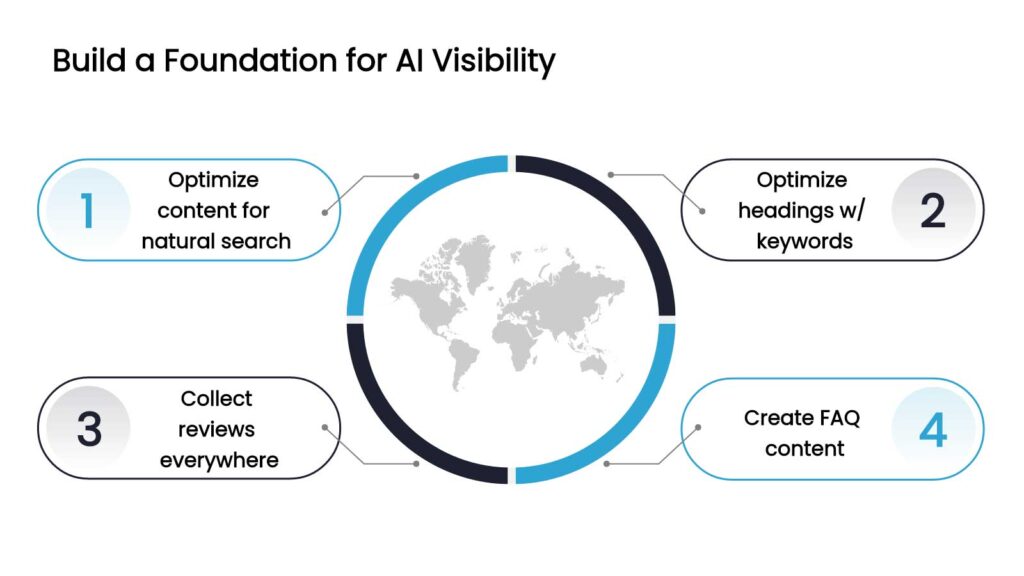
Four Actionable Steps to Get Found in AI Search Results
So, what can you do right now to improve your chances of being featured in these AI overviews and recommended by AI-powered tools like ChatGPT and Perplexity? Here are four practical, straightforward steps you can start implementing today.
1. Optimize Your Website Content with Natural, Detailed Language
AI thrives on detailed, clear, and natural language. Instead of vague phrases, use specific descriptions that explain exactly what you offer, who you serve, and why you’re the best choice.
For example, rather than saying “We bake cakes for all occasions,” try something like:
“We specialize in vanilla and chocolate cakes with buttered frosting, lightly salted, perfect for birthdays, weddings, anniversaries, and graduations.”
This kind of detailed information helps AI understand your services better and match you with specific, long-tail search queries like “caterer for son’s graduation with gluten-free options.”
Also, increase the length of your pages if they are too short (under 300 words). It’s not just about quantity — your content should be well-structured, easy to skim, and clearly organized with headings (H1, H2, etc.) that outline different topics.
This approach, what I call chunkification, breaks your content into manageable sections, making it easy for both humans and AI to digest.
2. Structure Your Website for Both Humans and AI
Good old SEO fundamentals are still very important. AI search results rely on well-structured web pages that use proper heading tags (H1, H2, etc.) to understand the hierarchy and topics covered.
- Make sure your pages are easy to navigate and skim.
- Use headings to break up content into logical chunks.
- Avoid large blocks of text without breaks.
Writing content that is both human-friendly and AI-readable is key. AI algorithms look at your headings and the content beneath them to determine what each section is about and whether it matches search intent.
Proper page structure also helps AI pull relevant snippets or quotes from your site to include in their recommendations.
3. Collect and Showcase Reviews from Multiple Platforms
Reviews are gold for AI recommendations. AI doesn’t pull reviews from just one place – it aggregates from Google Business Profiles, Yelp, TripAdvisor, and many other niche platforms depending on your industry.
To improve your chances of being featured, actively collect reviews from your customers. Make it easy for them by sending direct links to your Google Business Profile review page or other relevant review sites.
Don’t just collect reviews – display them prominently on your website. This not only helps AI see you as credible but also builds trust and confidence for visitors who land on your page.
Remember, AI recommendations based on reviews carry as much weight as traditional organic listings, as they target users who are ready to make a purchase or book a service.
4. Create a Comprehensive FAQ Section Using Real Customer Questions
FAQs are a powerful way to capture the exact questions your customers are asking. Think about the common questions people ask you on the phone or in emails. Write these out as full, natural language questions and provide detailed answers.
You have two options here:
- Create a dedicated FAQ page on your website with 5-10 key questions and answers.
- Add an FAQ section at the bottom of each service or product page, tailored to that specific offering.
Good FAQs do double duty – they help AI find the right answers that can lead it to recommend your business, and they also help human visitors get their questions answered quickly. This increasing conversions.
Since people are now searching with long-tail, conversational queries (e.g., “Who bakes gluten-free cakes for weddings?”), your FAQ content should mirror that natural language style.
FAQ: Practical Questions About Ranking in AI Overviews
Should I include links on my website that encourage visitors to leave reviews?
Yes, having a simple “Leave a Review” link in your footer or at the bottom of your service pages isn’t a bad idea. However, just having a link won’t automatically generate reviews. The best way to get reviews is to ask customers directly and provide them with a direct link to your review platform.
Does including reviews on my website help with AI search?
Absolutely. Displaying reviews on your site not only helps humans by providing social proof but also signals to AI that your business is trusted and relevant. AI can pull these reviews into its recommendations, increasing your chances of being featured.
Should I use hashtags in my review responses or on my website?
Hashtags are mostly useful on social media to help categorize content and encourage engagement. On your website or in review responses, they don’t have much impact on AI search visibility. Focus more on genuine, detailed responses to reviews and providing excellent service.
What should I include when responding to reviews?
Always respond to every review, even if it is just a simple “thank you” messages. Validate the customer’s experience and, if possible, mention specific services or products they used. For example, “Thanks for choosing us for your wedding cake—we’re thrilled you loved the vanilla buttered frosting!” This helps AI associate reviews with particular offerings.
Conclusion: The Future of Search is Here – Are You Ready?
The rise of AI overviews and zero-click search is changing how people find businesses online. While this shift presents challenges, it also offers new opportunities for those willing to adapt.
By optimizing your website content with detailed, natural language, actively collecting and showcasing reviews, creating customer-focused FAQ sections, and structuring your pages thoughtfully, you can position your business to be featured prominently in AI-powered search results.
Remember, this is just the baseline. The AI landscape is evolving rapidly, and staying informed and proactive will keep you ahead of the curve. If you take these steps now, you’ll be better prepared for the future of search – a future that’s happening right now.